Introduction
Achieving ISO 27001 certification is more than a compliance milestone; it is a commitment to building a secure, reliable, and trust-driven organization. For growing technology companies, it signals maturity in handling sensitive data and managing information security risks.
At Techlumas Solutions Private Limited, our journey to ISO 27001 certification took six months of focused effort, structured planning, and organization-wide alignment. This article outlines our approach, challenges, and key lessons learned along the way.
Why ISO 27001 Matters
ISO 27001 is an internationally recognized standard for Information Security Management Systems (ISMS). It provides a framework to identify risks, implement controls, and continuously improve security practices.
For us, the objective was not just certification, but building a strong foundation for:
- Data security and risk management
- Client trust and enterprise readiness
- Operational discipline and accountability
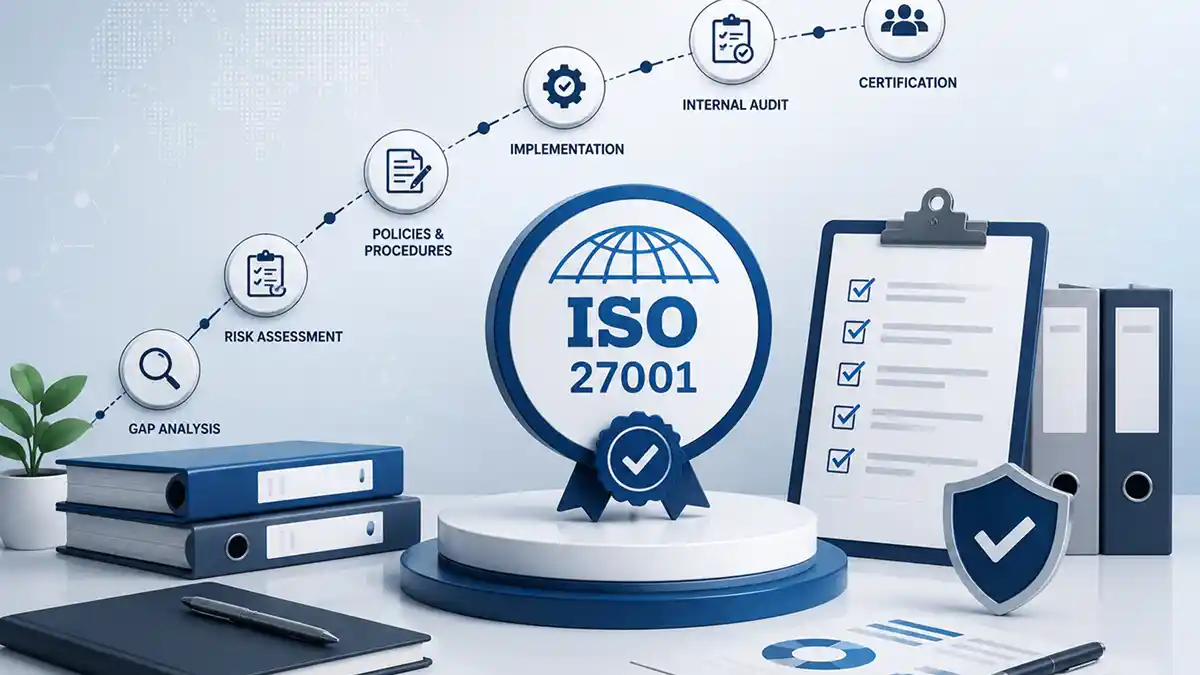
Phase 1: Gap Analysis and Planning
The journey began with a detailed gap analysis to understand where we stood against ISO 27001 requirements.
We evaluated:
- Existing security policies
- Access controls and data handling practices
- Infrastructure and system security
- Incident response readiness
This helped us identify critical gaps and define a structured roadmap with clear timelines and ownership.
Phase 2: Building the ISMS Framework
The next step was establishing a formal Information Security Management System.
This included:
- Defining security policies and procedures
- Identifying assets and risk owners
- Conducting risk assessments and treatment plans
- Establishing documentation and audit trails
One of the key challenges here was ensuring that processes were not just documented but also practical and enforceable.
Phase 3: Implementation Across the Organization
Security is not just an IT function; it requires organization-wide adoption.
We implemented:
- Role-based access controls
- Secure development practices
- Data protection and backup policies
- Vendor and third-party risk management
Employee awareness and training played a critical role in ensuring compliance and consistency.
Phase 4: Monitoring and Internal Audits
Once the system was in place, we focused on monitoring and validation.
This involved:
- Continuous tracking of security controls
- Internal audits to identify gaps
- Corrective actions and improvements
Regular reviews ensured that the ISMS remained effective and aligned with business operations.
Phase 5: External Audit and Certification
The final phase involved an external audit conducted by a certification body.
The audit evaluated:
- Compliance with ISO 27001 standards
- Effectiveness of implemented controls
- Documentation and evidence
After successfully clearing both stages of the audit, we achieved ISO 27001 certification.
Key Challenges We Faced
The journey was not without challenges.
One of the biggest hurdles was aligning teams across the organization. Security processes required changes in day-to-day operations, which took time to adopt.
Documentation was another significant effort. Maintaining accurate, up-to-date records required discipline and coordination.
Balancing security requirements with business agility was also critical. We ensured that controls were strong but not restrictive.
What We Learned
One of the most important lessons was that security is a continuous process, not a one-time effort. Certification is just the beginning.
We also learned that leadership involvement is essential. Without strong support from management, organization-wide adoption is difficult.
Another key insight was the importance of simplicity. Security processes must be practical and easy to follow to be effective.
Finally, early investment in training and awareness significantly reduces resistance and improves compliance.
Business Impact
Achieving ISO 27001 certification strengthened our credibility with enterprise clients and partners.
It improved our internal processes, reduced risks, and created a culture of accountability around data security.
Most importantly, it positioned Techlumas as a trusted technology partner capable of handling sensitive and large-scale projects.
Conclusion
ISO 27001 certification is a valuable milestone for any organization aiming to build trust, improve security, and scale responsibly.
At Techlumas Solutions Private Limited, the six-month journey reinforced the importance of structured processes, continuous improvement, and organization-wide commitment.
For businesses considering this path, the key is to approach it not just as a compliance requirement, but as a strategic investment in long-term growth and reliability.