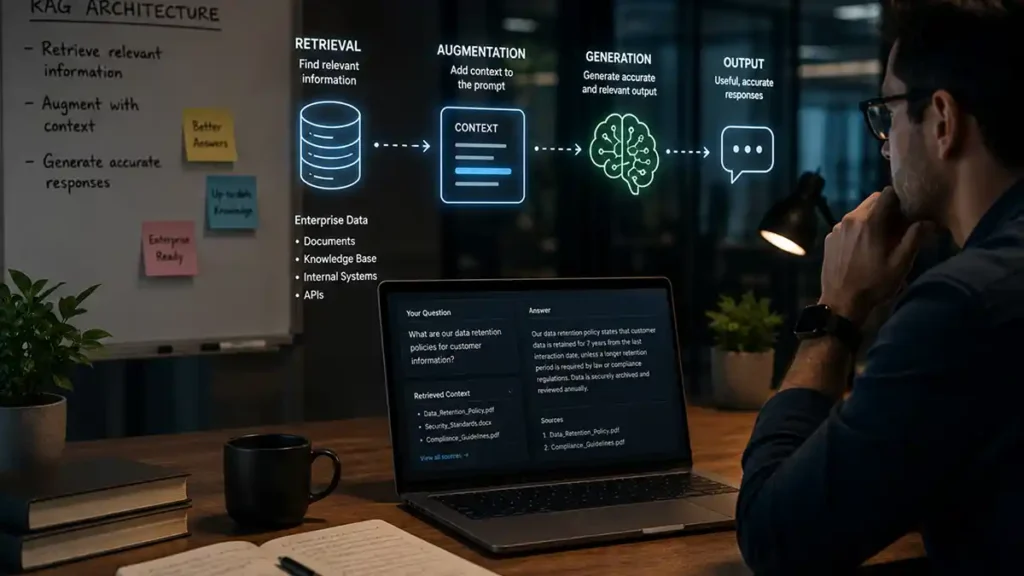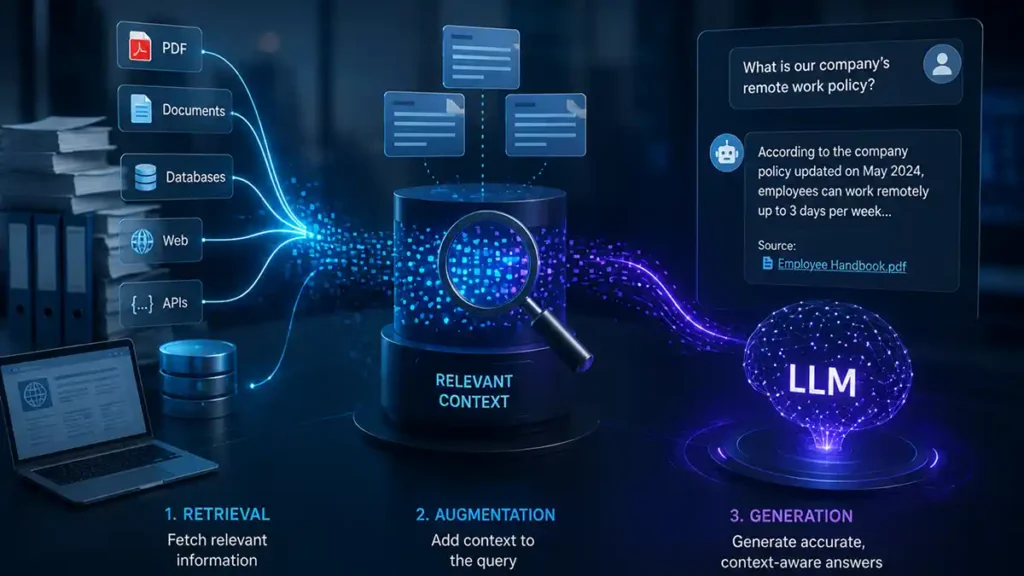
The pace of large language model adoption in enterprise software has been extraordinary, but most teams still struggle to move past the prototype stage. After shipping LLM features into more than 20 production systems, we have learned that the hard part is rarely the model itself — it is the engineering around it.
Retrieval beats fine-tuning for most use cases
For the majority of business problems, retrieval-augmented generation delivers better accuracy at a fraction of the cost of fine-tuning. It keeps answers current, avoids expensive retraining, and makes every response traceable to a source. Fine-tuning still matters for tone and format, but it is rarely the first tool to reach for. If you are planning a build, our AI and software development services team can help you choose the right approach.
The failure modes nobody warns you about
Three problems appear again and again in production:
- Context bloat — stuffing too much into the prompt degrades accuracy and inflates cost.
- Silent retrieval failures — when the retriever returns nothing relevant, the model confidently invents an answer.
- No evaluation harness — teams ship with no way to measure whether a change helps or hurts.
What good looks like
A production-grade LLM feature has grounded retrieval, guardrails, structured evaluation, and cost monitoring from day one. It is built like any other critical system — observable, testable, and owned. We apply these patterns across regulated industries such as fintech and healthcare, and you can see the outcomes in our portfolio of case studies.
Ready to build AI that actually ships? Hire dedicated AI developers or talk to our team about your project.